

(Note: Long ago I asked myself and drinking mates the uncomfortable question: do you drink your favorite drink because of the taste, or because of the feeling it gives you? Depending on your outlook in life, and the older you get, the more you gravitate towards either the first or the second reason. But that’s a different story.)

MOST PEOPLE drink alcohol for multiple reasons, but in my experience, the reasons are reduced to two main ones: (1) to get a buzz, and (2) because it’s almost a requirement on social occasions.
Sa OFW (overseas Filipino worker), there are variants to these reasons, and I’ll explain very quickly: (1a) very often, getting a buzz means momentarily forgetting problems and issues back home, and (2a) when you’re abroad, there aren’t a lot of alternatives to drinking. In fact, for an OFW, you drink almost out of boredom, when there’s almost nothing to do, and drinking alone, or drinking with mates, if you’re lucky, is the only show in town.
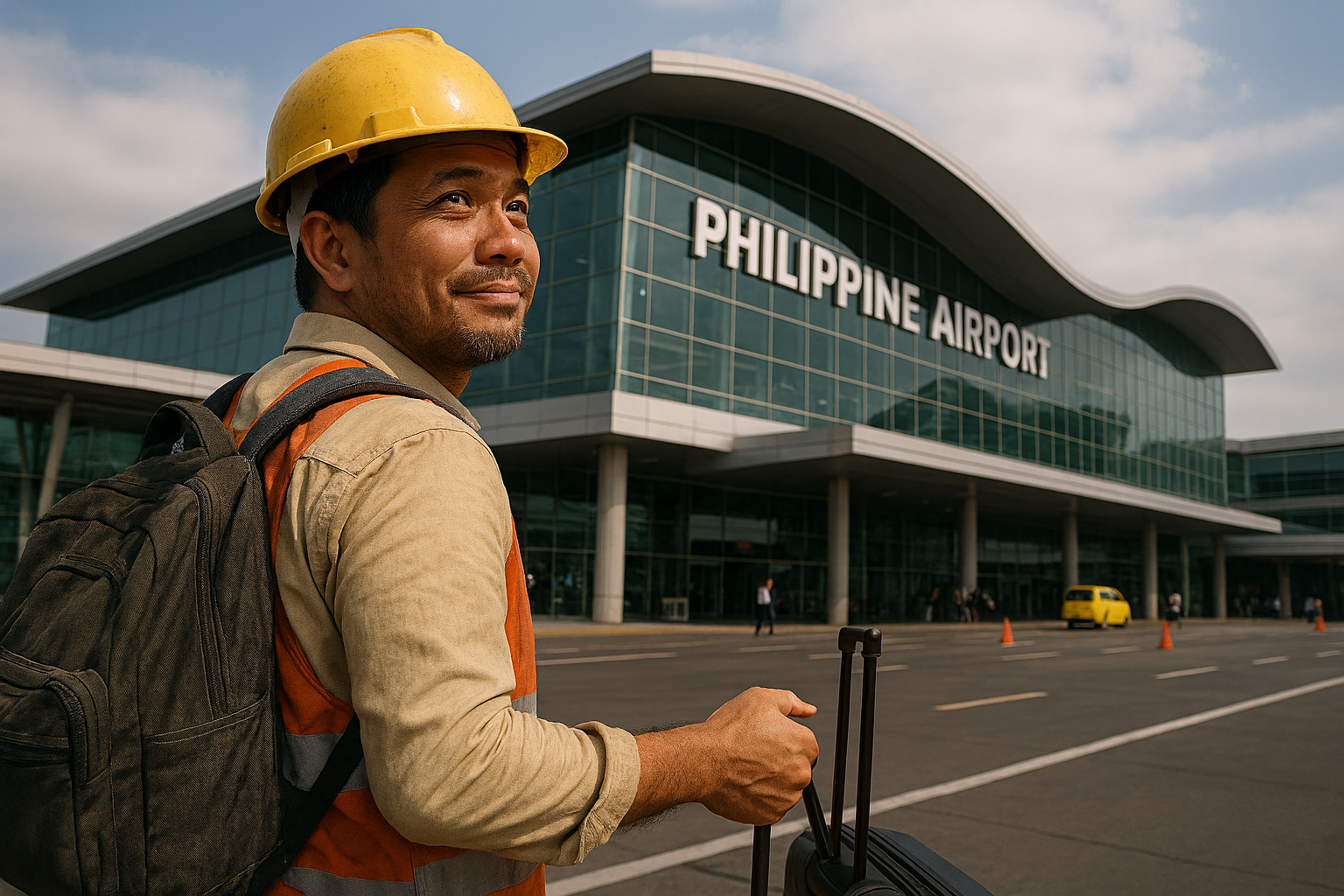
Baggage. You leave a lot of baggage when you become an OFW, whether it’s the emotional, financial, or relationship type of baggage. Baggage or bagahe is the collective term for the problems or issues you leave behind physically once you board the plane or ship, but which you actually bring with you wherever you are in this world. whether you’re a health professional, merchant marine or building contractor, you’re never without worries and concerns 24/7, and sometimes the best way to momentarily forget these is through the contents of the brown bottle or markang demonyo.
Quite a few things happen after the first and second drink: your brain starts to get foggy, your thought process slows down, your tongue loosens and inexplicably you become more sociable. A common side effect? You forget the most urgent and immediate issues of the day, how much you need to send home, the problem child that’s giving your spouse (or carer) a headache, etc. etc. Instead or being a cause of concern, you sometimes welcome this temporary lapse of memory while trading risque stories with colleagues, if only for a moment.
Of course the problems don’t go away if not worsen while you drink, it’s just that, before you sleep, you can pretend you are free of these problems, never mind tomorrow, and never mind the inevitable reckoning when you have to confront and face these problems.
inuman tayo p’re. not only is alcohol drinking a rite of passage to manhood, it’s frequently the best and only way men (and sometimes women) get to know each other. As touched on above, a couple of drinks are usually enough to turn even the most formal long-sleeved office worker into a casual, sleeveless after-hours guy with an I-don’t-care attitude. It’s a universal vice, that of tolerating so-called “social” drinking for the sake of bringing together people who’ve nothing in common into, by the end of the evening, best of (drinking) buddies.
So that, even on religious, official and civic occasions, there is the actual event itself, and the drinks afterward. What isn’t tolerated during the first becomes accepted in the second, it’s a free-for-all.
So that, by the time you become an OFW and live or work all over the world (even where alcohol is strictly prohibited), drinking to be sociable has become so granularly a part of you that, literally, it’s in your blood. Basta may inuman, dadalo lahat (ng kalakihan). May konting handa with a wink becomes code for inuman ang kasunod pare, one to sawa. Regular social drinking (which unfortunately can upgrade to binge drinking) becomes the highlight of the week, the month, and possibly the entire year you’re away from home. Sigh.
***** ***** *****
Which now brings us to the question no OFW wants to ask, which is why do we drink? We know it hardly solves any problems if at all, and the health consequences are too forbidding to consider.
By the way, you’re probably wondering why after all this time, we suddenly thought to ask this impertinent question. I’ll tell you why, Precious Reader / kabayan. After our life-saving surgery and even shortly before, some two point five months ago, we faced the option of rejecting the firewater after more than 30 years of running it through our liver and kidneys. We weren’t getting any younger, and as shown by our health issues, we weren’t helping our organs any.
The result was for the same period, we haven’t touched any form of alcohol, not attended any event which would expose us to the temptation, and not even going near the Wine & Beer section of the supermarket, despite all the deals, specials and colorful packaging.
Anyway, to make a long story short, we’ve had less headaches on weekends, no more binge eating that makes up pulutan whenever we have somebody over for beer, and our post-surgery recovery has been stress-free.
We’ve never been a problem drinker, or even a habitual drinker much less an alcoholic, but just the same we thought it was time. Are we a better person for doing it? Only time will tell. Time being alive, that is.
Back to our question five paragraphs earlier kabayan. Do we drink to be more sociable? Do we drink to get that buzz and sound cooler to the opposite sex? (Wait, with OFWs there’s nobody from the opposite sex 🙁 ) Do we drink to forget our problems, even for a moment?
Or for some other reason : maybe none of the above. Or most likely, maybe all of the above.
Thanks for reading, mabuhay!


You could think of so many reasons why many Filipinos love binge drinking. I was once a heavy drinker but later realized that it’s just a waste of time, money, health and relationship. One thing I know is I drank coz it was the only way I knew to engaged with people. It’s a cultural thing one that I learned from my environment when I was still young. I think this is the biggest factor. Lifestyle change, change of how I perceived the world, pick up healthy hobbies, and learn social skills are what made me get out of it.
Thanks for relating to us your very personal story and valuable insight Philpio. Indeed it’s never too late to change. Mabuhay ka!